A Nation in Mourning
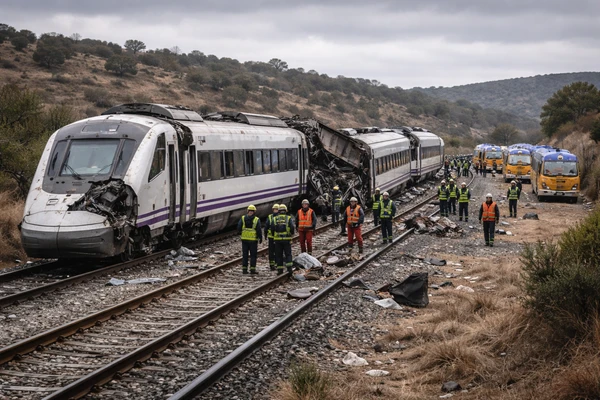
The Ghana Military Helicopter Crash on August 6, 2025, has plunged the country into collective grief. The tragedy claimed the lives of eight people—including two cabinet ministers, senior party officials, and three Ghana Air Force crew—when a Z-9 military helicopter crashed in a forested part of the Adansi Akrofuom District in Ghana’s Ashanti Region.
Government flags now fly at half-mast as investigations continue into what is being described as one of the darkest days in Ghana’s democratic era.
Timeline of Events: From Takeoff to Tragedy
The helicopter, identified as a Harbin Z-9EH, took off from Kotoka International Airport (Accra) at approximately 09:12 GMT, bound for Obuasi on an official government assignment. According to Ghana Armed Forces (GAF) reports, the aircraft lost radar contact just minutes after takeoff.
Search and rescue teams—including personnel from the GAF, Ghana Police Service, and the National Disaster Management Organisation (NADMO)—began combing the dense Adansi forests. Hours later, the wreckage was located near Adansi Sikaman, its remains charred and scattered across a steep, wooded area.
GAF confirmed that all eight on board had perished. The remains were airlifted to Accra for forensic identification and official autopsy.
Identities of the Victims Confirmed
Government and Party Leadership
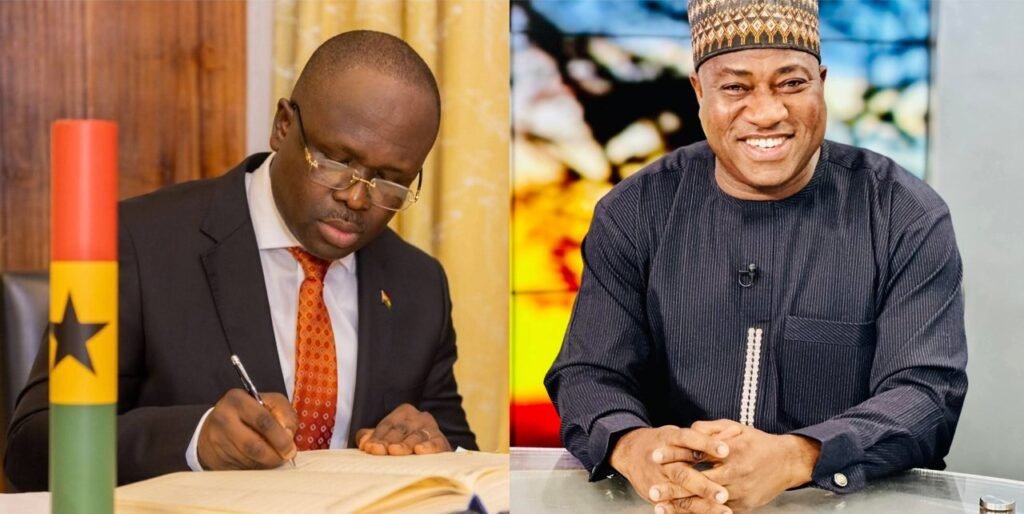
- Dr. Edward Kofi Omane Boamah, Minister for Defence.
Former Minister of Communications (2013–2017), Dr. Omane Boamah was a respected medical doctor and policy reformer known for his focus on national security and cybersecurity modernization. - Dr. Ibrahim Murtala Muhammed, Minister for Environment, Science, Technology & Innovation and MP for Tamale Central.
A passionate environmental advocate, he previously served as Deputy Minister for Trade & Industry and Deputy Minister for Information. - Dr. Samuel Sarpong, Vice-Chairman of the National Democratic Congress (NDC) and former Regional Minister.
- Alhaji Muniru Mohammed, Acting Deputy National Security Coordinator.
- Mr. Samuel Aboagye, former NDC parliamentary candidate and development consultant.
Ghana Air Force Crew
- Squadron Leader Peter Bafemi Anala, Pilot
- Flying Officer Mane-Twum Ampadu, Co-pilot
- Sergeant Ernest Addo Mensah, Flight Engineer
These names have been officially confirmed by the GAF and corroborated by leading national outlets.
Investigation Launched: Board of Inquiry Convened
The Ghana Armed Forces has established a Board of Inquiry to investigate the Ghana Military Helicopter Crash. Preliminary findings confirm the recovery of flight-data recorders and other crucial evidence from the wreckage.
A GAF spokesperson said investigators were working alongside civilian aviation engineers and military safety experts to establish the root cause. “We are examining technical records, flight data, and maintenance history,” the spokesperson noted.
While early media speculation pointed to potential mechanical malfunction, officials emphasize that no cause has yet been confirmed. Weather conditions were reportedly normal, but investigators are not ruling out any possibilities.
Mission Background: Official Assignment to Obuasi
Sources within the Ministry of Defence revealed that the flight was part of a joint assignment to Obuasi, where ministers were expected to meet regional security leaders and mining authorities. The mission reportedly related to illegal mining (galamsey) interventions and environmental inspections—a priority area for the government since February 2025.
The Z-9 helicopter model, introduced into GAF service in 2015, is typically used for VIP transport, surveillance, and search-and-rescue operations.
National Response: Flags Lowered, Hearts Heavy
Chief of Staff Julius Debrah, in a televised briefing, described the Ghana Military Helicopter Crash as “a national tragedy that touches every Ghanaian.” President John Dramani Mahama reportedly broke down upon receiving the news and immediately ordered all flags flown at half-mast.
State funerals are being planned for the deceased, with a joint memorial service expected to be held at Independence Square. Across Accra, Kumasi, and Tamale, thousands have gathered at candlelight vigils to honor the fallen leaders.
Global and Domestic Condolences
Messages of sympathy have poured in from around the world. The United Nations in Ghana, represented by Resident Coordinator Zia Choudhury, stated:
“The UN in Ghana extends heartfelt condolences to the government and people of Ghana. This tragedy is a shared loss across our global community.” — Citi Newsroom
Neighboring countries—including Nigeria, Côte d’Ivoire, and Sierra Leone—sent delegations and condolence letters. Ghana’s partners in the ECOWAS bloc and the African Union commended the service of the deceased officials and expressed solidarity during the period of mourning.
Profiles in Leadership and Legacy
Dr. Edward Kofi Omane Boamah (1974 – 2025)
A physician by training and a visionary reformer, Dr. Boamah spearheaded national cybersecurity initiatives and defence modernization policies. His leadership in integrating military disaster response with civil-defence coordination earned him wide respect.
Dr. Ibrahim Murtala Muhammed (1974 – 2025)
Known for his charisma and grassroots activism, Dr. Muhammed championed youth inclusion and climate-resilience projects. His sudden passing is seen as a major blow to Ghana’s environmental agenda.
Both men symbolize the new generation of Ghanaian leadership that blended professionalism with social reform.
Aviation Safety and Institutional Accountability
Experts note that the Ghana Military Helicopter Crash raises critical questions about aviation safety management within the Armed Forces. Ghana’s Air Force fleet includes several Z-9 and Mi-17 helicopters acquired for peacekeeping and internal operations. Analysts have long warned about the challenges of maintaining imported aircraft with limited local technical capacity.
A retired Air Force engineer told GSN:
“The Z-9s are reliable but require meticulous maintenance cycles. Any gap—be it funding, oversight, or spare-parts delays—can pose risks.”
In the aftermath, the government faces mounting pressure to introduce independent aviation safety audits, create a National Military Flight Safety Council, and improve pilot training standards.
Comparative Context: Previous Military Air Incidents
Though rare, Ghana has experienced military aviation accidents before. In 2005, a training aircraft crashed near Giffard Camp, killing two officers, and in 2012, a cargo plane overshot the runway at Accra’s airport. However, the 2025 event marks the first time in modern history that multiple sitting cabinet ministers have died in a single military air incident.
Regional parallels—such as Nigeria’s 2021 Air Force jet crash that killed Chief of Army Staff Ibrahim Attahiru—underscore systemic issues in West African military aviation oversight.
Political Implications: Cabinet Reshuffle and Stability
The Ghana Military Helicopter Crash has left critical vacancies in President Mahama’s administration just six months after cabinet formation. Analysts predict an urgent mini-reshuffle to fill the Defence and Environment portfolios.
Political scientist Dr. Kobby Mensah observed:
“Beyond the emotional impact, this tragedy tests institutional resilience. Continuity in national security and environmental policy must be guaranteed even as the nation grieves.”
Opposition and civil-society leaders have called for bipartisan cooperation to ensure stability during the investigation and transition period.
Public Reaction: Outpouring of Solidarity
Across social media, hashtags such as #GhanaHelicopterCrash, #RIPOmaneBoamah, and #RIPMurtala trended nationwide. Citizens shared tributes, archived speeches, and photos from the ministers’ earlier campaigns.
The NDC’s youth wing organized national blood-donation drives and memorial lectures, emphasizing unity. Churches and mosques held special prayers for the victims and their families.
“This tragedy has reminded us that life is fleeting and service to humanity is sacred,” said Rev. Dr. Paul Frimpong Manso of the Ghana Pentecostal Council.
Media Ethics and Information Management
In the immediate aftermath, fake crash images circulated online. The Ministry of Information cautioned media outlets to rely on verified sources such as Reuters, BBC, GAF HQ, and JoyNews.
Global Standard News reaffirms its editorial standards of Truth, Depth, and Global Reach, urging responsible journalism that honors the dignity of victims and upholds factual integrity during national crises.
National Recovery and Way Forward
The tragedy has prompted a national conversation on resilience and accountability. Parliament’s Defence and Interior Committee is expected to table motions for enhanced oversight of the Air Force fleet, while the Civil Aviation Authority explores joint safety drills with the GAF.
President Mahama has pledged government support for affected families and instructed the Ministry of Transport and Defence to present a comprehensive aviation-safety framework within six months.
Conclusion: Eight Lives, One Nation’s Resolve
The Ghana Military Helicopter Crash will be remembered as a turning point in Ghana’s history—a tragedy that revealed both the fragility of leadership and the strength of national unity.
As investigators work to uncover the cause, Ghana stands determined to learn, reform, and honor those who served with courage and dedication. Their legacy now becomes the foundation for a safer, stronger, and more accountable nation.
External Link
Ghana Armed Forces Official Website