A Blaze That Shocked the Tourism Community
The Accra Tourism Fire has become one of Ghana’s most significant public safety incidents of 2025, following a destructive blaze that gutted the Ghana Tourism Authority’s (GTA) regional information centre near the iconic Afrikiko area in Accra. The early morning fire, reported on August 4, left behind a scene of smouldering ruins, prompting a wave of concern across the hospitality and travel sectors.
Officials from the Ghana National Fire Service (GNFS) confirmed that no lives were lost, but extensive damage was done to the structure and key tourism materials. As investigations continue, attention now shifts toward how Ghana can strengthen fire safety, digital resilience, and infrastructure within its tourism industry.
The Strategic Role of the GTA Centre
Before the Accra Tourism Fire, the GTA regional information centre served as a crucial hub for both domestic and international tourists. It housed promotional materials, guided visitors, coordinated local tour operators, and functioned as a repository for national tourism data.
The centre’s strategic position near Afrikiko — a cultural and hospitality landmark — made it one of the busiest tourism points in Ghana. The Ghana Tourism Authority, established under the Ministry of Tourism, Arts and Culture, has long relied on such centres to promote regional tourism and support local businesses.
According to tourism analysts, this fire not only represents the loss of infrastructure but also a temporary setback in Ghana’s mission to achieve its 2025 Tourism Development Goals.
Sequence of Events: How the Accra Tourism Fire Unfolded
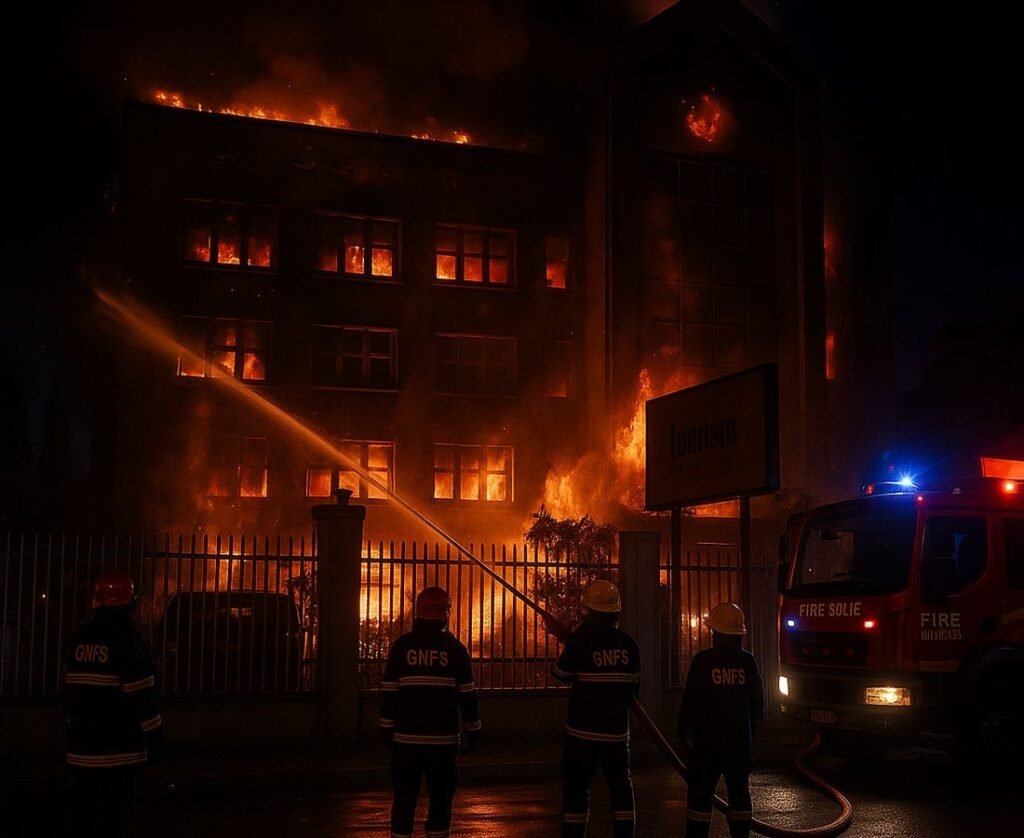
The Accra Tourism Fire began at approximately 2:55 AM, when residents nearby noticed smoke rising from the GTA compound. GNFS spokesperson ADO1 Alex Nartey confirmed that firefighters were alerted immediately.
“We arrived at the scene at 3:03 AM, just eight minutes after the emergency call,” he stated. “By that time, the fire had already spread through the reception and records section.”
Two fire engines and a team of seven officers were deployed from the GNFS headquarters to battle the flames. After nearly 40 minutes of intense firefighting, the blaze was contained. Early investigations indicate that an electrical fault may have triggered the incident, though the GNFS has not ruled out other causes.
Authorities have since cordoned off the site to conduct a detailed structural assessment. The Ministry of Tourism has also pledged full cooperation in the ongoing probe.
Assets and Records Lost in the Inferno
The Accra Tourism Fire left behind widespread destruction. Inside the gutted structure were thousands of brochures, cultural pamphlets, promotional videos, and digital databases — all essential for Ghana’s tourism marketing and information services.
Officials estimate that over 80% of printed and digital materials were lost, including:
- Tourism guidebooks and regional brochures
- Visitor registration and tracking systems
- Local tour operator directories
- Historical promotional archives
The financial cost is still being calculated, but early projections suggest damages could exceed ₵3 million. Beyond monetary loss, however, lies the challenge of restoring trust and continuity.
A GTA officer told GSN:
“This wasn’t just a workplace; it was the heartbeat of tourism information in Accra. Its loss is deeply felt by our entire sector.”
Institutional Response: Safety Audits and Service Continuity
In response to the Accra Tourism Fire, both the GNFS and the Ghana Tourism Authority have initiated immediate remedial measures.
The GNFS has issued a nationwide directive urging government agencies to:
- Conduct periodic electrical system audits.
- Install smoke detectors and fire suppression equipment.
- Train employees in emergency response procedures.
Meanwhile, the GTA has redirected all regional service requests to its national headquarters to ensure uninterrupted operations. Minister of Tourism, Arts and Culture, Hon. Abla Dzifa Gomashie, announced plans for a modernized, fire-resistant replacement facility.
“We are determined to rebuild stronger. Ghana’s tourism must project safety, efficiency, and innovation,” she emphasized.
This swift administrative response has been widely praised by industry professionals, who view it as a step toward resilience and modernization.
National Reaction: Outpouring of Concern and Support
News of the Accra Tourism Fire spread rapidly across social media platforms, where Ghanaians expressed both relief and frustration. The hashtags #AccraTourismFire, #SaveOurHeritage, and #RebuildGTA trended for hours on X (formerly Twitter).
Tourism ambassador and renowned musician Okyeame Kwame tweeted:
“We nearly lost a vital chapter of Ghana’s tourism story. Let’s rebuild with technology and stronger safety systems.”
Others called on the government to integrate digital storage systems, arguing that critical data and promotional content should never rely solely on physical archives.
Civil society organizations, including the Ghana Hoteliers Association, have pledged support for the restoration project, urging the ministry to use this incident as a model for systemic reform.
Structural Weakness and Reform Imperatives
Analysts say the Accra Tourism Fire exposes systemic weaknesses within public infrastructure maintenance and safety enforcement. Fire safety experts note that many government buildings lack functional alarms, extinguishers, and inspection schedules.
Dr. Kwesi Aning, a public policy researcher, explained that:
“This incident should trigger a comprehensive audit of all public facilities. Safety cannot be reactive — it must be embedded in every institution’s operational culture.”
Economically, Ghana’s tourism industry could experience short-term disruptions as the GTA reallocates resources toward rebuilding. However, long-term reforms — including digitization, cloud backups, and smart monitoring systems — could enhance efficiency and resilience across the sector.
Broader Implications: Tourism Confidence and Global Image
Beyond national borders, the Accra Tourism Fire has implications for Ghana’s global tourism perception. International travel partners and agencies closely monitor infrastructure safety, particularly in destinations marketed as business and cultural hubs.
If Ghana manages a transparent, well-coordinated rebuilding effort, it could reinforce its reputation as a responsive and resilient tourism destination. Conversely, delays or mismanagement could affect confidence among tour operators and investors.
Tourism contributes approximately 6.2% to Ghana’s GDP and supports more than 400,000 jobs, according to the World Travel & Tourism Council. Safeguarding this sector from similar incidents is therefore critical to sustaining national growth and global competitiveness.
Recovery Outlook: A New Era for Tourism Infrastructure
The rebuilding phase following the Accra Tourism Fire will likely redefine Ghana’s approach to tourism facility management. The Ministry of Tourism, in collaboration with the Accra Metropolitan Assembly (AMA) and private sector partners, has already initiated plans for a fire-resistant, eco-friendly, and digitally connected GTA centre.
New designs reportedly include:
- Smart fire detection systems
- Renewable power backups
- Cloud-based information archives
- Visitor engagement kiosks and digital displays
These improvements align with Ghana’s broader Tourism Digitization Agenda 2025, aimed at transforming physical tourism centres into integrated information and experience hubs.
Rising from the Ashes
The Accra Tourism Fire is a wake-up call for Ghana’s public sector to prioritize safety, modernization, and data resilience. Although the blaze caused significant material loss, it also presents an opportunity to rebuild smarter and stronger.
As the Ministry of Tourism and its partners move forward, stakeholders hope that this tragedy will spark a culture of preventive maintenance, not just in Accra but across all regions. Ghana’s tourism story continues — this time, with renewed determination to protect the institutions that shape it.
Internal Links for Readers:
- Ghana Road Safety Emergency: 1,504 Dead in 6 Months
- Kotoka Airport Firearms Seizure: Over 2,000 Rounds Found