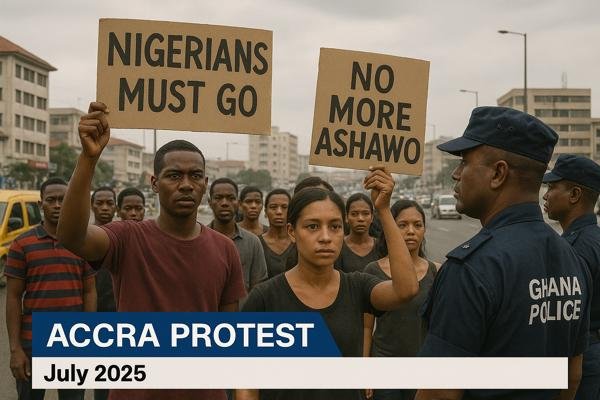
The Ghana Nigeria Protests 2025 that erupted on July 26 have reignited public discussion about xenophobia, misinformation, and regional unity in West Africa. Small demonstrations in Accra, Kumasi, and Kasoa saw protesters calling for the expulsion of Nigerians, citing alleged involvement in crimes such as kidnapping, prostitution, and ritual killings. While social media magnified the event with dramatic visuals, verified findings show that the demonstrations were limited in scale and largely peaceful.
Historical Context Behind Ghana Nigeria Protests 2025
The Protests draw attention to a recurring strain in Ghana–Nigeria relations rooted in economic competition, migration, and misinformation. Over the years, Ghanaians and Nigerians have coexisted productively through trade, education, and entertainment. However, social frustrations linked to unemployment and economic hardship have periodically triggered anti-immigrant sentiments.
Analysts trace the roots of this protest wave to the reemergence of the “Nigeria Must Go” campaign—first seen in 2019—which resurfaced online earlier in 2025. Experts say the Ghana Nigeria Protests 2025 illustrate how deep-seated grievances and digital misinformation can combine to destabilize community trust if left unchecked.
Verified Scope and Localized Nature of the Protests
Independent media, including Sahara Reporters, confirmed that the Ghana Nigeria Protests 2025 occurred around Obra Spot in Accra, with smaller clusters in Kumasi and Kasoa. Contrary to viral claims, no nationwide movement occurred, and Ghana Police Service records show no permits were issued for mass demonstrations.
Eyewitnesses reported fewer than 200 participants in Accra, most of them youths expressing concern about rising local crime. The protests ended without violence or property destruction, and the Ministry of the Interior has not classified the event as a threat to public order.
Media Misinformation and Fact-Checking Efforts
The role of misinformation was pivotal in shaping perceptions of the Protests. Social media platforms—especially TikTok, X (formerly Twitter), and WhatsApp—circulated dozens of misleading videos. Fact-checkers from The Nation Nigeria later traced several clips to unrelated events, including a 2023 London protest and earlier demonstrations in South Africa.
Media experts warn that recycling old footage under new hashtags like #NigeriaMustGo can escalate tension between communities. Ghana’s Cyber Security Authority has since urged citizens to verify online information before sharing, emphasizing that misinformation remains a significant risk to public peace.
Propaganda Imagery and Questionable Placards
Several viral photos from the Protests showed protesters holding placards accusing Nigerians of ritual killings and spreading diseases through prostitution. However, Ghana’s Ministry of Information and Police Service have not authenticated the origin of these images. Digital analysts identified signs of manipulation—such as inconsistent shadows and fonts—indicating that some visuals were altered.
The Media Foundation for West Africa (MFWA) called on both journalists and citizens to prioritize verified facts over sensational content. The organization stressed that spreading unverified allegations can heighten xenophobic rhetoric and jeopardize Ghana’s reputation as a peaceful regional hub.
Official and Diplomatic Responses to Ghana Nigeria Protests 2025
Ghana’s Government Stance
Hon. Mubarak Mohammed Muntaka, Ghana’s Minister for the Interior, addressed Parliament to reaffirm the nation’s commitment to protecting all residents. He described the Ghana Nigeria Protests as “a wake-up call to guard against divisive propaganda” and cautioned against vigilante actions. The Minister assured that the Ghana Police Serviceremains vigilant and ready to protect both Ghanaians and foreign nationals.
Nigeria’s Diplomatic Position
Abike Dabiri-Erewa, Chairperson of the Nigerians in Diaspora Commission (NIDCOM), condemned the protests and appealed for restraint. She clarified that no verified evidence supported reports of property damage or attacks on Nigerians. NIDCOM also confirmed that Nigeria’s Foreign Ministry had engaged Ghanaian authorities to maintain calm and mutual understanding during the aftermath of the Ghana Nigeria Protests 2025.
ECOWAS and Cross-Border Diplomacy
The Ghana Nigeria Protests 2025 prompted ECOWAS to initiate informal consultations on rising misinformation and inter-state tension. The regional bloc emphasized the importance of cooperation among member states to prevent xenophobic incidents from spreading. Nigerian diplomat Ambassador Bianca Ojukwu has been in contact with Ghana’s Ministry of Foreign Affairs to ensure continuous dialogue.
Global and Human Rights Oversight
The United Nations Office for West Africa and the Sahel (UNOWAS) expressed concern over the digital escalation of the protests. It urged both governments to promote digital literacy and responsible information sharing. Ghana-based NGOs, including the African Centre for Media Excellence, warned that online disinformation poses long-term risks to national security if left unaddressed.
The Role of Social Media in Shaping Public Perception
Social media amplified the Ghana Nigeria Protests 2025 far beyond their physical scope. Between July 19 and 27, data from Ghana’s Cyber Security Authority revealed a 46% surge in posts mentioning “#NigeriaMustGo.” Analysts link this to coordinated misinformation campaigns aiming to provoke outrage. While online platforms empower civic participation, experts stress that algorithms rewarding engagement can unintentionally spread harmful falsehoods.
To mitigate this, authorities have pledged to work with global technology firms to detect and remove fake content. Civil society advocates call for public awareness campaigns to help citizens distinguish between authentic and manipulated media during events like the Ghana Nigeria Protests 2025.
Expert Commentary and Analytical Overview
Political analysts believe the Ghana Nigeria Protests 2025 demonstrate how economic hardship and social tension can evolve into broader diplomatic challenges. Dr. Kwaku Ofori, a political scientist at the University of Ghana, noted that “when misinformation meets economic anxiety, minority communities often become easy targets.” He emphasized that governments must invest in crisis communication and cross-border diplomacy to prevent xenophobic sentiments from spreading.
Comparisons to South Africa’s 2019 anti-immigrant protests and Côte d’Ivoire’s 2023 social media riots show that misinformation remains a regional security threat. Ghana’s swift containment of the protests, however, has been praised as a sign of institutional resilience.
Broader Implications for West African Stability
The Protests highlight the urgent need for a unified regional approach to digital regulation and public education. ECOWAS’s early engagement shows growing recognition that misinformation is not just a communication issue but a potential security concern. Collaborative initiatives involving governments, tech companies, and civil society can help prevent similar crises.
For Ghana and Nigeria, preserving their long-standing trade and cultural ties is crucial. Diplomatic calm following the Ghana Nigeria Protests 2025 demonstrates that mutual respect and clear communication remain the best tools against misinformation-driven unrest.
Conclusion
Though the Protests were limited in scale, their digital amplification exposed the volatility of cross-border relations in the age of misinformation. Both nations have since reaffirmed their commitment to dialogue and coexistence. The protests serve as a reminder that factual reporting, digital literacy, and responsible media consumption are essential for sustaining peace in an increasingly interconnected region.
Internal Links
- Trump Birthright Citizenship Ban Blocked
- UN Warns of Hunger Crisis in Nigeria
- Burna Boy Apology Stuns Fans
- Davido Timeless UK Silver Certification
- External Links:
- Vanguard Nigeria – Regional Diplomacy
- The Nation Nigeria – Fact Check