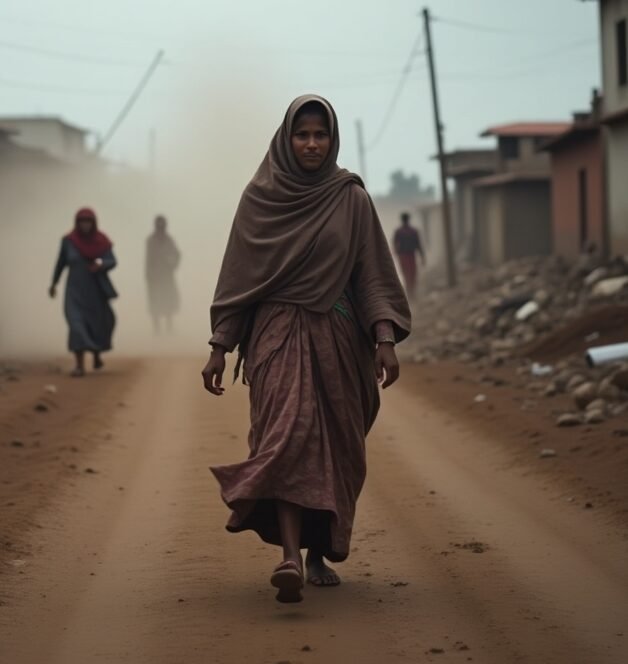
The Assam Muslim Evictions Crisis stands as one of India’s most polarizing humanitarian flashpoints in 2025. In July alone, more than 3,400 homes belonging to Bengali-speaking Muslims were demolished, displacing over 21,000 residents across seven districts. What authorities called a “land reclamation exercise” has ignited global outrage and renewed debate over India’s treatment of its Muslim minorities ahead of the upcoming state elections.
Historical Roots of the Assam Muslim Evictions Crisis
The roots of the Evictions Crisis are deeply embedded in the state’s fraught history of migration, identity, and citizenship. Bengali-speaking Muslims have lived in Assam for generations, contributing to its agriculture and culture. Yet suspicion over “foreign infiltration” has persisted since the 1970s Assam Agitation, which culminated in the 1985 Assam Accord—a pact meant to identify and deport undocumented migrants.
Tensions intensified after the 2019 National Register of Citizens (NRC) process excluded nearly 1.9 million people, most of them Muslims, from India’s citizenship list. Many of these individuals—though born in India—found themselves labeled as “illegal immigrants.” The NRC controversy laid the groundwork for what human-rights advocates now describe as a “state-engineered purge” manifesting through evictions.
Scale and Pattern of the Demolitions
Official data and field reports confirm that the demolitions under the Assam Muslim Evictions Crisis have spanned at least seven districts: Dhubri, Barpeta, Goalpara, Nagaon, Morigaon, Hojai, and Bongaigaon. The campaign unfolded between July 1 and July 26, 2025, under heavy police supervision.
| Date | District | Action | Estimated Impact |
|---|---|---|---|
| July 1 | Barpeta | Initial demolition phase begins | 200+ homes removed |
| July 4 | Baghbor | Protests intensify as houses razed | 230 homes |
| July 15 | Dhubri | Largest single clearance | 1,100 homes |
| July 24–26 | Goalpara & Nagaon | Coordinated operations | 450 homes |
| July 27 | UN statement issued | International attention | – |
Witnesses recount traumatic scenes of bulldozers arriving at dawn.
“They gave us minutes. My children were barefoot when they tore our house down,” said Razia Begum, a mother of four displaced from Dhubri.
Children, elderly residents, and women have been left exposed to monsoon rains, living under makeshift tarps without food or sanitation. Aid groups estimate thousands remain unaccounted for.
Political Dynamics and Election Context
Analysts argue that the Assam Muslim Evictions Crisis is unfolding in a politically charged environment just months before the October 2025 state elections. The ruling Bharatiya Janata Party (BJP), led by Chief Minister Himanta Biswa Sarma, insists the operations target illegal encroachment on government and forest land.
However, opposition leaders from Congress and the All India United Democratic Front (AIUDF) allege the policy disproportionately affects Muslim-majority districts.
“These actions are designed to instill fear and suppress Muslim participation in the polls,” said Badruddin Ajmal, AIUDF leader.
Political commentators believe the evictions are part of a broader ideological agenda aimed at reshaping Assam’s voter demographics. The government denies any communal motive, calling the process “legally justified and environmentally necessary.”
Legal and Constitutional Dimensions
Legal experts have characterized the Assam Muslim Evictions Crisis as a violation of constitutional safeguards. At least a dozen petitions have been filed before the Guwahati High Court, citing breaches of:
- Article 21 – Right to life and livelihood
- Article 14 – Equality before the law
- Principle of Natural Justice – Lack of notice and fair hearing
Indian law mandates prior notification, public consultation, and alternative housing before any forced demolition. Yet multiple testimonies suggest none of these conditions were met.
“Eviction without rehabilitation contravenes both national statutes and international human-rights conventions,” said Dr. Ananya Chakraborty, a constitutional law scholar at Jawaharlal Nehru University.
Despite ongoing litigation, bulldozers continue to roll, highlighting the legal impunity surrounding state-led displacements.
Lives Uprooted and Futures Uncertain
At the heart of the evictions crisis are families like those of Mohammad Rafiq, a 17-year-old student from Barpeta:
“We lost everything—our books, our certificates, our home. We are Indians. Why are we treated like outsiders?”
Eyewitnesses report mosques, schools, and community wells among the structures destroyed. Humanitarian volunteers describe worsening conditions—malnutrition among children, disease outbreaks in temporary shelters, and mental trauma among survivors.
Aid organizations warn that unless rapid relief and rehabilitation efforts begin, displaced populations could face long-term destitution. The absence of official camps or compensation has made recovery nearly impossible.
Global Response and Human-Rights Advocacy
The Assam Muslim Evictions Crisis has provoked an international wave of criticism.
- Amnesty International labeled the demolitions “a systematic campaign of displacement.”
- Human Rights Watch (HRW) accused the government of “weaponizing administrative power against minorities.”
- The UN Human Rights Council (UNHRC) issued a formal briefing on July 27, calling for an “immediate moratorium on demolitions and independent inquiry.”
Diaspora communities in the UK, UAE, and Canada organized solidarity protests under banners reading “Homes Not Hate” and “Justice for Assam.” International law experts are urging India to honor its commitments under the Universal Declaration of Human Rights and the ICCPR (International Covenant on Civil and Political Rights).
Governance or Grievance Politics?
Independent analysts suggest the Assam Muslim Evictions Crisis exposes deeper structural weaknesses in India’s governance model—where bureaucratic actions blur into political signaling. Some see the campaign as a bid to project administrative strength ahead of elections; others view it as a manifestation of majoritarian populism.
“By conflating land management with ethnic identity, Assam risks undermining social cohesion and long-term economic stability,” notes political scientist Dr. Vivek Mehta.
The demolitions have also hurt the local economy. Farmers deprived of land cannot access credit or inputs, while small traders displaced from market zones face bankruptcy. The result: growing poverty, polarization, and mistrust in institutions.
Broader Implications for India’s Democracy
Beyond Assam, the Assam Muslim Evictions Crisis has sparked national debate about the limits of executive power and the fragility of minority protections in modern India. Civil-rights groups warn that unchecked evictions could set a precedent for similar actions in other states.
Globally, India’s reputation as the “world’s largest democracy” faces scrutiny from international watchdogs and parliaments debating human-rights sanctions. Diplomats say how India handles Assam will determine the credibility of its constitutional commitments.
A Defining Test of Justice and Humanity
The Assam Muslim Evictions Crisis is more than a local dispute—it is a defining test of India’s democracy, rule of law, and moral conscience. As the bulldozers recede, what remains are broken homes, broken lives, and urgent questions: Can policy justify pain? Can legality exist without humanity?
Unless accountability, compensation, and inclusive dialogue follow, Assam’s scars will outlast the headlines, haunting both the state and the spirit of Indian democracy.
📊 Crisis Overview
| Metric | Figure |
|---|---|
| Homes demolished (July 2025) | 3,417 |
| Estimated displaced population | 21,300+ |
| Districts affected | 7 |
| Legal petitions filed | 12 |
| Elections scheduled | October 2025 |
Internal GSN Links
- Gaza Children Starving Crisis – WHO Confirms 21 Deaths
- Measles Resurgence in U.S. Southwest
- France Grants Ghana Debt Relief