A Defining Fiscal Moment
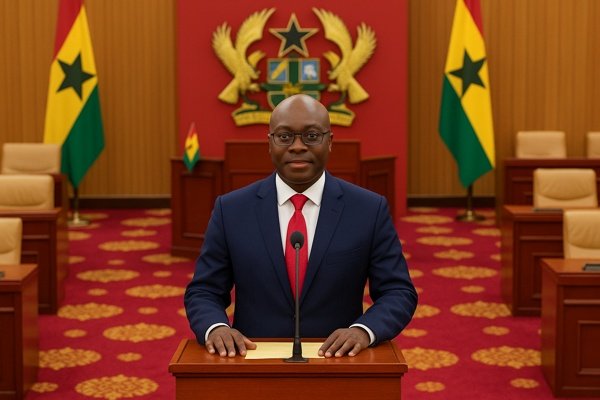
The Ghana Budget 2025 Review, delivered on July 24, 2025, by Finance Minister Dr. Cassiel Ato Forson in Parliament, marks a critical juncture in Ghana’s economic recovery path.
With inflation easing below 28% and remittance inflows at historic highs, the mid-year presentation sought to balance fiscal prudence with growth incentives before the 2026 general elections.
It reflected a government intent on sustaining stability after years of economic turbulence—showcasing both progress and the persistence of structural challenges.
From IMF Support to Fiscal Discipline
Since Ghana’s 2023 IMF program, the nation has undergone a rigorous stabilization process emphasizing debt restructuring, currency resilience, and domestic revenue enhancement.
Earlier budgets introduced digital tax systems, property-rate automation, and energy subsidy reforms, steering the economy toward transparency and accountability.
The Ghana Budget 2025 Review continues this fiscal reset. It underscores government’s resolve to avoid new taxes, sustain primary balance improvements, and maintain credibility with international lenders.
Analysts note that the absence of supplementary spending requests signals a shift toward a “no-deficit-surprises” strategy.
Remittance Inflows: A $6.6 Billion Cushion for Stability
Remittances have emerged as Ghana’s quiet economic engine.
According to Bank of Ghana data, inflows surged from $4.6 billion (2023) to $6.6 billion (2025) — a 43% increase that cements Ghana’s position as Sub-Saharan Africa’s second-largest recipient after Nigeria.
These funds have bolstered household consumption, foreign-exchange reserves, and overall liquidity in the banking sector.
Economists expect the Ghana Budget 2025 Review to outline measures for remittance-backed bonds, diaspora investment vehicles, and tax incentives encouraging long-term diaspora capital participation in housing, agribusiness, and renewable-energy ventures.
Internal Link: Gold Price Record High: Gold Surges Past $3,500 Mark
Inflation Management: Price Stability and Sector Support
Ghana’s inflation rate, which once soared above 54% in 2023, has eased to 27.8% by June 2025.
The Ghana Budget 2025 Review attributes this progress to monetary tightening, prudent fiscal coordination, and strategic food-import programs aimed at smoothing price shocks.
Dr. Forson is expected to unveil targeted fuel and fertilizer subsidies, while the government considers VAT adjustments for essential goods to ease consumer pressure.
The Bank of Ghana’s latest forecast of inflation in the mid-20% range by year-end signals a cautiously optimistic outlook, with ambitions of achieving single-digit inflation by 2026.
Revenue Strategy: Enhancing Collection and Reducing Borrowing
Revenue mobilization remains Ghana’s Achilles’ heel.
Despite improvements in compliance, tax-to-GDP ratios hover below regional peers. The Ghana Budget 2025 Reviewemphasizes digital invoicing, integrated revenue databases, and public-private partnerships (PPPs) to close collection gaps.
Domestic borrowing, meanwhile, continues to exert pressure on interest costs, with T-bill rates still around 30%.
Dr. Forson’s team is expected to implement debt-swaps, expenditure rationalization, and public-sector payroll controlto reduce fiscal strain, especially within the energy sector.
Such consolidation measures, if sustained, could help restore investor trust and improve Ghana’s sovereign-credit outlook.
Signaling Stability Before 2026
This mid-year update arrives as Ghana faces heightened scrutiny from global bond markets and credit-rating agencies.
The Ghana Budget 2025 Review is widely interpreted as an effort to reinforce investor assurance through data-backed discipline and transparent reporting.
International lenders are likely to watch closely how Ghana aligns fiscal outcomes with IMF benchmarks.
A steady tone from Dr. Forson — focused on realism rather than rhetoric — could anchor confidence and potentially open doors to Eurobond re-entry once conditions stabilize.
Internal Links:
– Sudan Famine War: 25 Million Trapped in Deadly Civil Crisis
– UK Immigration Rules 2025: 3 Big Changes Now in Effect
Expert Commentary: Balancing Stability and Growth
Economic analyst Dr. Lydia Mensah describes the Ghana Budget 2025 Review as “a careful dance between restraint and recovery.”
She applauds government’s decision to freeze new tax proposals, arguing that predictability is crucial for private-sector planning.
However, she warns that structural bottlenecks — including youth unemployment, rising import costs, and lingering energy arrears — must be tackled decisively if the fiscal turnaround is to endure.
Business associations welcomed the focus on domestic production, urging quicker disbursement of agriculture and manufacturing support funds announced in previous budgets.
Economic and Social Implications
Globally, the Ghana Budget 2025 Review projects Ghana as an example of fiscal maturity within Africa’s emerging-market landscape.
Its adherence to IMF transparency standards and commitment to macroeconomic balance enhances Ghana’s appeal to institutional investors.
Locally, citizens will assess its tangible outcomes — from fuel-price stability to job creation and cost-of-living relief.
For the diaspora community, the review signals a structured opportunity to invest in remittance-linked instrumentsthat drive long-term national growth.
Pathway to a Sustainable Recovery
The Ghana Budget 2025 Review underscores a pragmatic vision — fiscal restraint without halting growth momentum.
If effectively implemented, its mix of discipline, innovation, and accountability could steer Ghana toward sustainable recovery, strengthen investor confidence, and lay the groundwork for inclusive prosperity in 2026 and beyond.