Introduction: A Crisis No Child Should Endure
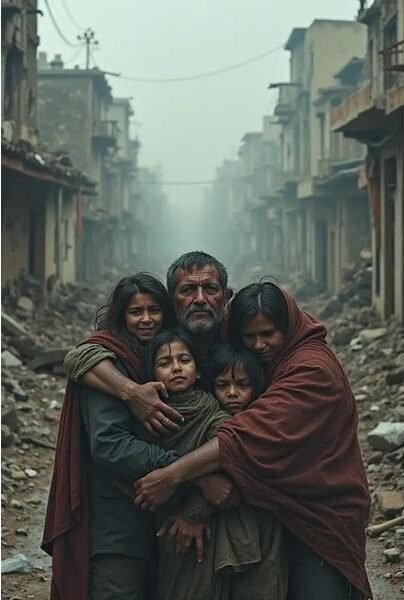
The Gaza children starving crisis has become one of the gravest humanitarian emergencies of 2025. Between July 20 and 22 alone, at least 21 children under five died from acute malnutrition and dehydration, according to reports by the Gaza Health Ministry, the World Health Organization (WHO), and UNICEF.
“We are witnessing a famine in motion. Every delay means another child lost,” said WHO Director-General Tedros Adhanom Ghebreyesus.
For Gaza’s youngest, hunger is no longer a fear—it is a fatal daily reality. Fuel shortages, water contamination, and blocked aid convoys have turned malnutrition wards into morgues.
What We Know So Far
- 21 child deaths in 3 days (July 20–22)
- 41 % of children under 5 now face acute malnutrition
- 90 % of households lack regular access to food
- Hospitals are overwhelmed and without fuel or clean water
- WHO confirms deaths linked directly to restricted humanitarian access
The world is watching as Gaza children starving becomes a phrase synonymous with collective moral failure.
Inside Gaza’s Collapsing Hospitals
At Al-Shifa Hospital, nurse Laila Samouni describes unimaginable suffering:
“The children arrive too weak to cry. Their mothers bring them wrapped in rags, praying there’s something left we can do.”
One-year-old Amal, weighing just 4.2 kg, died hours after arrival. Her story echoes hundreds of cases where Gaza children starving reach medical care far too late.
Nearby, Al-Rantisi Children’s Hospital has stopped accepting new pediatric patients. Without IV fluids, antibiotics, or fuel for incubators, doctors improvise oral sugar-salt mixtures. “We’re choosing who gets oxygen,” one physician admitted.
International medics warn that Gaza’s health system is “in total collapse”—its pediatric wards functioning as triage lines between survival and starvation.
Gaza Starvation Emergency: Key Stats (As of July 27, 2025)
| Indicator | Data |
|---|---|
| Child deaths (July 20–22) | 21 |
| Malnutrition in children < 5 years | 41 % |
| Households eating ≤ 1 meal/day | 91 % |
| Functioning incubators in Gaza | < 20 |
| Aid trucks allowed in (July) | 14 of 250 |
| Clinics lacking IV fluids | 83 % |
Behind every number is a name—a child who deserved a future.
Timeline: How Gaza Children Began Starving
| Date | Event | Impact |
|---|---|---|
| July 1 | UN warns of rising hunger | Early alerts issued |
| July 5–10 | Aid convoys blocked at Rafah and Kerem Shalom | Supplies stranded |
| July 15 | Surge in child hospitalizations | 70 + cases/day |
| July 20–22 | 21 deaths confirmed | Highest toll to date |
| July 27 | WHO raises global alarm | Level 3 Emergency declared |
Global Response: WHO, UN, and the World Speak Out
United Nations
UN Secretary-General António Guterres condemned the child deaths as “morally indefensible,” urging an immediate 72-hour ceasefire and safe humanitarian corridors.
He stressed that denying food and medicine “constitutes a violation of international humanitarian law.”
World Health Organization (WHO)
The WHO classified Gaza as a Level 3 Health Emergency—its highest alert. It warned that the Gaza children starving crisis could trigger lifelong stunting, anemia, and psychological trauma among survivors.
“Without immediate corridor access, child mortality will multiply within weeks,” the agency stated.
UNICEF
UNICEF issued a Red Alert, deploying mobile nutrition units and requesting emergency funding to prevent the collapse of neonatal and maternal care.
Its spokesperson said, “Every hour we wait means another infant dies of hunger or thirst.”
European Commission
The EU pledged €25 million in fresh aid and called on regional powers to “prioritize access over politics.” EU Commissioner for Crisis Management Janez Lenarčič added: “Children must never be hostages to diplomatic deadlock.”
United States and Allies
The U.S. State Department announced $10 million in supplemental funding and urged Israel to open additional crossings for humanitarian supplies. However, aid groups say bureaucratic delays still prevent lifesaving materials from entering Gaza in time.
Eyewitness Testimonies from Gaza
“We’re feeding our children water and salt. There is no milk. We use cloth for diapers.”
— Noura Al-Atrash, mother of twins in Jabalia
“We lost seven babies this week alone. All of them could have been saved if aid had arrived.”
— Dr. Ahmed Darwish, pediatrician, Khan Younis
“Children are dying from malnutrition in front of our eyes while trucks wait at the border.”
— MSF team leader in Rafah camp
Such accounts have galvanized activists worldwide, with online campaigns under hashtags #GazaChildrenStarving, #SaveGazaKids, and #LetAidIn drawing millions of shares.
What Must Happen Immediately
To halt the spiral of Gaza children starving, international leaders must take decisive steps:
- 72-Hour Ceasefire: Guarantee uninterrupted food and medicine deliveries.
- UN Air Drops: Deploy infant nutrition kits and medical packs directly to critical zones.
- Hospital Fuel Restock: Ensure power for incubators, oxygen systems, and lighting.
- Medical Evacuation: Transfer critical children to field hospitals in Egypt or Jordan.
- Border Peacekeeping: Station neutral forces to prevent politicization of aid.
The humanitarian community argues that political gridlock cannot be an excuse for mass child starvation.
Expert Insight: The Bigger Picture
Dr. Sarah Mohsen, a humanitarian analyst with the Arab Health Coalition, summarizes:
“What we’re seeing is not just starvation — it’s structural violence against a generation. The damage will echo for decades through malnutrition, trauma, and lost education.”
Experts warn that the Gaza children starving tragedy reflects a systemic failure of international governance and aid coordination. Relief efforts have been fragmented, funding shortfalls crippling, and political restrictions overwhelming.
UN agencies say that unless borders fully open within two weeks, child mortality could quadruple. Malnutrition’s long-term impact—stunting, anemia, and cognitive delay—will shape Gaza’s future for generations.
Diplomatic and Political Implications
The Gaza children starving crisis has ignited a fresh debate at the UN Security Council. Humanitarian resolutions have repeatedly been vetoed amid geopolitical divisions.
Arab League nations demand an independent international investigation into whether aid blockages constitute war crimes. Meanwhile, Israel maintains that aid screenings are necessary for security, accusing Hamas of diverting supplies.
In Washington and Brussels, lawmakers face mounting pressure from civil society to condition military assistance on humanitarian access. Demonstrations in London, Paris, and New York demand “ceasefire for the children.”
Humanitarian Logistics Breakdown
Aid agencies report that of 250 trucks approved for July, only 14 entered Gaza — less than 6 %. Each truck carries enough supplies for about 2,000 people for three days, far below the minimum required to stabilize nutrition levels.
Blocked routes at Rafah and Kerem Shalom have also halted UNICEF’s refrigerated deliveries of ready-to-use therapeutic food (RUTF), critical for severely malnourished infants.
The World Food Programme (WFP) confirms that stockpiles are down to less than four days of ration. Local bakeries operate only intermittently due to fuel shortages, and 90 % of Gaza’s population relies on food aid that no longer arrives.
Information Blackout and Media Access
Independent journalists have limited entry to Gaza, forcing global newsrooms to depend on NGO feeds and citizen footage. This restricted visibility has slowed international mobilization.
Human rights groups urge Israel and Egypt to grant foreign press access to document conditions in real time. Transparency, they argue, is crucial for accountability and for breaking “compassion fatigue.”
Global Standard News ( GSN ) continues to verify developments through partner organizations and cross-checked field reports to maintain accuracy and ethical reporting standards.
Moral Responsibility and Faith Communities
Faith-based organizations across Christian, Muslim, and Jewish communities are uniting to demand action. The Pope has called for “humanitarian corridors of mercy,” while Grand Imam of Al-Azhar urged Muslims worldwide to donate and pray for Gaza’s children.
Interfaith coalitions in Europe and Africa are coordinating food and medical fundraisers as part of a global #SaveGazaKids campaign.
Internal GSN Links
- WHO Issues New Mosquito-Borne Disease Guidelines
- Measles Resurgence in U.S. Southwest
- Immigration Rules 2025: 3 Big Changes Now in Effect