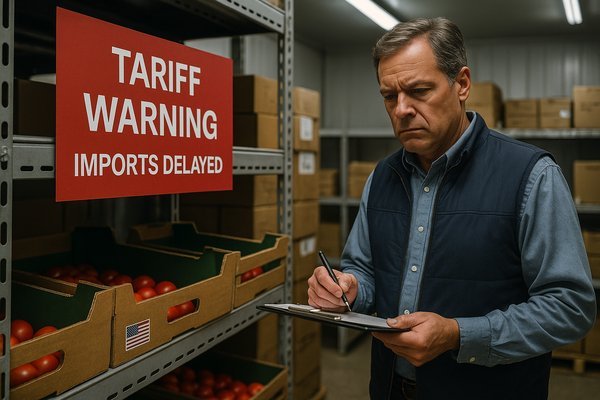
The tomato shortage tariff debate is heating up across the United States as the government considers imposing a 17% duty on tomato imports from Mexico. U.S. wholesalers are warning that such a move could trigger immediate price hikes, threaten availability, and hurt both businesses and consumers.
This proposal, currently under review by the U.S. Trade Representative (USTR), is part of broader trade policy negotiations. If approved, the tariff would dramatically reduce the volume of imported tomatoes—currently making up more than half of the U.S. supply—causing a ripple effect across grocery stores, restaurants, and processing plants. The potential impact of the tariff is already causing shifts in supply chain behavior.
Mexico’s Role in U.S. Tomato Supply
Mexico is the largest supplier of fresh tomatoes to the United States, providing nearly 60% of the country’s tomato supply annually. Under the North American Free Trade Agreement (NAFTA) and its successor, the United States-Mexico-Canada Agreement (USMCA), trade has flowed relatively freely. However, with the tomato shortage tariff on the table, the dynamics could change drastically.
“Any tariff, particularly one as high as 17%, will disrupt our ability to meet demand,” says Carla Henderson, director of procurement at California Fresh Produce Distributors. “Our reliance on Mexico during the winter months is absolute.”
Price Spike and Economic Ramifications
With fewer imported tomatoes, the laws of supply and demand kick in. Wholesale prices could jump by 25–40%, depending on the season, and consumer prices might follow. For products like salsa, pasta sauce, and canned tomatoes, the effect would be more pronounced. The tomato shortage tariff could drive inflation across other food sectors as well.
Already, retail chains such as Kroger and Albertsons are preparing for potential supply squeezes by reviewing sourcing options and warning stakeholders about price volatility tied to the tomato shortage tariff.
Impact on Restaurants and Food Chains
For restaurants—especially pizza parlors, Mexican cuisine outlets, and sandwich chains—tomatoes are a staple. According to the National Restaurant Association, tomato-based ingredients account for over 20% of condiments and sauces used in fast food.
“If this tariff goes through, we’re either paying more or changing menus,” laments Juan Morales, owner of a popular taco restaurant chain in Texas. “And customers will feel it immediately.” Restaurateurs across the nation are lobbying against the tariff.
American Farmers React Cautiously
While some American tomato growers are in favor of the tariff, hoping it will level the playing field, others worry about the long-term backlash. U.S. farmers fear retaliatory trade measures from Mexico and a potential shortage of agricultural labor, which could nullify any short-term gains.
“Trade wars are like tomato blight,” says Jim Beasley, a Florida tomato farmer. “They spread fast and hurt everyone.” Meanwhile, industry analysts caution that the tomato shortage tariff could destabilize regional markets.
Industry Reactions and Political Commentary
Major industry groups like the Fresh Produce Association of the Americas (FPAA) have openly opposed the proposal, issuing statements that the tariff would harm consumers and businesses alike.
Political responses have been mixed. While some lawmakers defend the tariff as a tool for economic fairness, others argue it’s an unnecessary disruption during a time of inflation and food insecurity.
“We need to protect domestic growers,” said Senator Ray Collins of Georgia, “but we also need to ensure affordable produce for American families.” Debate over the tariff is expected to escalate on Capitol Hill.
Data Behind the Shortage Risk
In June 2025 alone, the U.S. imported over 235,000 metric tons of tomatoes from Mexico. Should the tariff go into effect, projections suggest this figure could plummet by 40% over the next quarter.
A recent Reuters video report highlights how wholesalers are already scaling back orders in anticipation, a move that may cause artificial scarcity even before the tariff becomes law. Data analysts warn that the tomato shortage tariff may also encourage hoarding behaviors.
Mexico’s Diplomatic Response
The Mexican government has called the tariff “unjustified and politically motivated,” threatening counter-tariffs on corn and beef if the measure moves forward. Trade officials in Mexico City warn that such policy decisions could severely undermine the goodwill built during USMCA negotiations. The tariff may reignite old trade tensions.
Supply Chain Alternatives
To reduce dependency on Mexican imports, the U.S. is exploring alternative sources such as Canada, Guatemala, and domestic greenhouse farming. However, these alternatives are expensive and currently lack the capacity to meet demand.
Several agri-tech startups have suggested vertical farming solutions for tomatoes, but scaling these solutions would take years—not weeks or months. This timeline is incompatible with the urgency of the tomato shortage tariff timeline.
Global Trade Implications
The tomato shortage tariff issue extends beyond the U.S. and Mexico. Countries like Canada and Brazil, which also import Mexican tomatoes for redistribution, could be impacted.
The World Trade Organization (WTO) may be pulled into arbitration if Mexico files a formal complaint, adding another layer of complexity to global food trade diplomacy.
Internal & External Links
Internal:
- Mali Burkina Faso Niger Exit ICC in Historic Move
- Afghanistan Earthquake: 620 Dead as Villages Collapse
- Italian Facebook Group Sharing Wives’ Photos Shut Down
External: