A Political Transformation in Motion
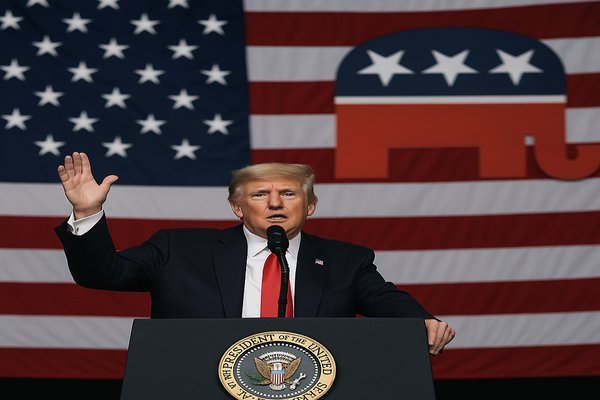
The Republican Party power surge represents one of the most dramatic shifts in modern U.S. politics. Under former President Donald Trump, the GOP has evolved from a conventional conservative party into a populist movement driven by nationalism, media dominance, and institutional control. As Trump positions himself for another presidential run, his imprint on Republican structures and ideology shows no signs of fading.
From Populist Movement to Political Establishment
The roots of the Republican Party power surge lie in the populist wave that propelled Trump to the White House in 2016. His defiance of traditional politics appealed to working-class Americans who felt neglected by Washington elites. Trump’s rhetoric on immigration, trade, and cultural identity built a durable base that extended beyond elections—it became a governing philosophy.
Following his 2020 defeat, Trump consolidated influence within party structures rather than retreating. By reshaping the Republican National Committee (RNC), installing loyalists, and leveraging digital media, he transformed a temporary movement into an enduring political machine. The result is a GOP increasingly defined by his personality, priorities, and populist energy.
Current Developments: Ten Turning Points in the Republican Party Power Surge
1. Enduring Popularity and the Cultivation of Loyalty
Despite legal setbacks and controversies, Trump maintains extraordinary support among Republican voters. Gallup’s 2024 poll found over 76% of GOP members view him favorably, underscoring his central role in the Republican Party power surge. His continued dominance in polls illustrates the durability of personal loyalty as a political force.
2. Electoral Consolidation Across State and Federal Levels
In 2024, Trump-backed candidates swept GOP primaries nationwide, effectively sidelining establishment conservatives. State legislatures, congressional districts, and governorships increasingly reflect Trump’s policy priorities. This deep institutional alignment solidified the Republican Party power surge beyond rhetoric—embedding it in legislative governance.
3. Strategic Restructuring of the Republican National Committee
The RNC’s leadership overhaul in 2023 replaced traditional operatives with Trump-aligned figures. By controlling party finances, digital strategy, and national messaging, Trump secured unmatched organizational leverage. Analysts credit this centralization as one of the most decisive phases of the Republican Party power surge.
4. Communication Dominance Through Media Networks
From Truth Social to conservative cable outlets, Trump commands an expansive media ecosystem that amplifies his narrative. His direct engagement with supporters bypasses traditional journalism, reinforcing his position as the GOP’s chief messenger. This communication control has become a cornerstone of the Republican Party power surge in shaping public discourse.
5. Ideological Reorientation of Republican Policy
The GOP’s transformation from free-market globalism to protectionist populism defines the intellectual essence of the Republican Party power surge. Policies once associated with Ronald Reagan—like open trade and military interventionism—have been replaced by tariffs, border control, and “America First” nationalism. These positions now dominate congressional and campaign agendas.
6. Erosion of Internal Opposition and Party Dissent
Traditional conservatives such as Mitt Romney and Nikki Haley have struggled to challenge Trump’s authority. Many fear backlash from his fervent base or isolation within the party. The suppression of rival narratives underscores the Republican Party power surge as both a political consolidation and a cultural realignment.
7. Legal Challenges as Catalysts for Political Sympathy
Multiple indictments and investigations have paradoxically strengthened Trump’s standing. Supporters interpret them as partisan persecution, bolstering his status as a political martyr. This framing transforms legal adversity into a rallying point, turning courtroom drama into fuel for the Republican Party power surge.
8. Expansion of Trumpism Across State Governments
Republican-led states like Texas, Florida, and Arizona are adopting policies modeled on Trump-era governance—restricting mail voting, reshaping education curricula, and tightening immigration enforcement. These state-level shifts illustrate how deeply the Republican Party power surge has penetrated American institutions.
9. Faith-Based Alignment and Evangelical Mobilization
Once skeptical of Trump, evangelical leaders now view him as a defender of conservative Christian values. Their endorsement—echoed across churches and faith-based networks—has embedded the Republican Party power surgewithin moral and religious discourse, reinforcing its cultural legitimacy.
10. Reconfiguration of U.S. Foreign Policy Doctrine
The GOP’s foreign policy stance has undergone a profound transformation. Trump’s skepticism toward NATO, his transactional diplomacy, and alignment with nationalist leaders in Hungary, Brazil, and India signify a shift from traditional internationalism to strategic nationalism. This global repositioning defines the Republican Party power surgeas a force that extends beyond domestic politics.
Analytical Insight: Mechanisms Behind the Movement
The persistence of the Republican Party power surge lies in its hybrid nature—part populist uprising, part institutional reform. It operates simultaneously from the top down (through leadership control) and bottom up (through grassroots loyalty). Trump’s appeal to identity, grievance, and national pride has replaced policy debates with emotional resonance.
Political analysts at The Brookings Institution argue that this model marks a new era of personalized party politics, where ideology is secondary to allegiance. The Republican Party power surge exemplifies this evolution, making traditional party platforms almost obsolete in the face of charismatic authority.
Reactions and Perspectives: Divided Political Landscape
- Supporters hail the surge as a reclamation of political authenticity—crediting Trump with reconnecting the GOP to working-class America.
- Critics, including Liz Cheney, warn that the consolidation threatens democratic norms and internal debate.
- International observers, such as the BBC and Reuters, frame the Republican Party power surge as part of a broader global populist revival, paralleling movements in Europe and Latin America.
Even within the party, strategists are divided: some view Trump as essential to winning in 2026, while others fear his polarizing impact could alienate moderate voters.
Global and Domestic Implications
The Republican Party power surge has redefined U.S. political dialogue both at home and abroad. Domestically, it has shifted the Overton window—forcing Democrats to adopt tougher stances on trade, immigration, and security. Internationally, it emboldens nationalist movements advocating sovereignty over multilateralism.
Economically, states aligned with Trump’s policies are attracting domestic manufacturing investment through deregulation and tax incentives. Culturally, debates around gender, race, and education are now fought along lines drawn by Trump-era rhetoric. The Republican Party power surge has thus moved beyond party politics—it is reshaping American identity itself.
Conclusion: The Future of Trump’s Political Legacy
Whether Donald Trump secures a return to the presidency or not, the Republican Party power surge has already ensured his lasting influence. He has reshaped how the GOP recruits candidates, frames its message, and engages voters. Analysts suggest that even post-Trump, the GOP’s political DNA will remain imprinted with Trumpism—making this movement one of the most consequential in modern U.S. history.
Internal & External Links
- Internal:
- External: