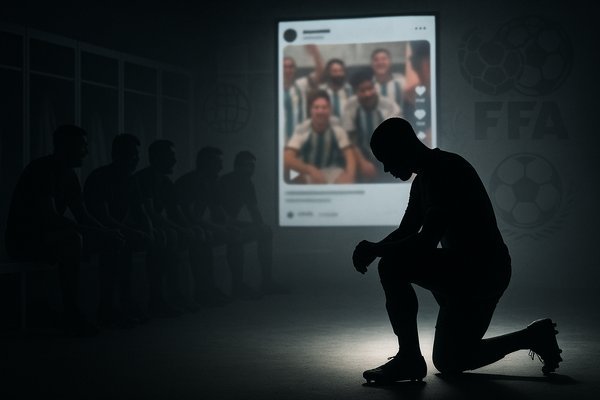
The FIFA racism investigation has reignited global debate over racism in football after a viral video showed Argentina’s players mocking France’s Black footballers with racist chants. The footage, which included Enzo Fernandez and head coach Lionel Scaloni, emerged after Argentina’s Copa America victory celebrations. FIFA’s decision to open an inquiry has since drawn condemnation, apologies, and renewed scrutiny of football’s handling of racial issues.
How the Viral Video Sparked a FIFA Racism Investigation
In the footage widely shared online, several Argentine players appeared to chant racially offensive lyrics about French players of African descent. Reports identified midfielder Enzo Fernandez and coach Lionel Scaloni among those present.
French and international observers condemned the footage as deeply troubling, calling it a setback for anti-racism efforts in sports. FIFA responded swiftly, announcing a formal investigation into the Argentine Football Association’s conduct and the individuals involved.
Reuters confirmed that the footage circulated by Fernandez himself before being deleted drew widespread outrage. France’s Football Federation (FFF) formally lodged a complaint, citing “clear racial discrimination.”
Regulatory Context: Inside FIFA’s Disciplinary Framework
The ongoing FIFA racism investigation operates under Articles 3 and 57 of FIFA’s Code of Ethics, which prohibit discrimination or insults based on race, color, or origin.
FIFA’s disciplinary panel typically follows a strict process that includes:
- Collection and verification of video evidence
- Interviews with players, coaches, and witnesses
- Recommendations for individual and team sanctions
If misconduct is confirmed, penalties could include match bans, point deductions, or financial sanctions against the Argentine Football Association (AFA). FIFA officials have emphasized that the investigation aims to reaffirm “zero tolerance” for racism in the sport.
Reactions from France and Global Football Leaders
The investigation has triggered widespread condemnation from top football officials, international players, and fans.
- Philippe Diallo, president of the FFF, condemned the chants as “racist and discriminatory acts that stain football’s values.”
- Former France captain Hugo Lloris said, “Celebration is no excuse for racial insults.”
- Chelsea defender Wesley Fofana called the video “uninhibited racism that must not go unpunished.”
Meanwhile, Argentina’s vice president attempted to defend the players, referring to France as a “colonialist nation.” That statement inflamed the controversy further, prompting the French Ministry of Sport to label the defense “offensive and historically tone-deaf.”
Analysis: What the FIFA Racism Investigation Reveals About Football Culture
The FIFA racism investigation underscores a long-standing challenge in world football — addressing racial bias within locker rooms and fan culture.
Sports analysts note that while FIFA has penalized racist incidents before, enforcement often lacks consistency. Past precedents include:
- Serbia’s 2019 fine for racist fan chants against England players
- A 2002 ban against Cameroon’s coach for racist remarks
- UEFA disciplinary action against clubs for repeated racist behavior
Critics argue that FIFA must move beyond fines toward educational reforms and long-term cultural change. The current case could set a new benchmark for accountability.
Public Apology and Immediate Fallout
Following the public outrage, Enzo Fernandez issued an apology, saying he was “carried away by the euphoria” of victory. However, many consider the apology insufficient given the scale of backlash.
Sponsors like Adidas and Coca-Cola are reportedly reviewing their contracts with players linked to the controversy. Hashtags such as #NoToRacism and #FIFAInvestigationTrending have dominated social media, with millions urging stronger sanctions.
The FIFA racism investigation has also prompted the Argentine Football Association to launch an internal review, though no suspensions have yet been announced.
How the Investigation Could Affect Argentina’s Reputation
For Argentina, the ongoing investigation represents a serious image crisis. The country’s celebrated football legacy—anchored by Lionel Messi’s recent triumphs—now faces scrutiny for ethical lapses.
Diplomatic observers note potential strain on Argentina-France relations, with France’s ambassador reportedly seeking consultations with FIFA officials. If found guilty, the Argentine team could face bans or disqualification from upcoming competitions.
Commercial and Institutional Response
Global sponsors and advertisers have taken notice. Companies such as Nike and Visa have issued statements reaffirming their “zero-tolerance stance on racism.”
Several human rights organizations are urging FIFA to use the FIFA racism investigation as a catalyst for reform, calling for mandatory anti-racism training and permanent ethics oversight in international tournaments.
According to Amnesty International, “This case could become a watershed moment in holding elite athletes accountable for discriminatory conduct.”
Why This Case Matters Beyond Football
Beyond the disciplinary outcome, experts believe the FIFA racism investigation represents a broader social reckoning. It challenges institutions to confront cultural biases and ensure that global sports remain inclusive and equitable.
Sociologists highlight that racial slurs in competitive environments normalize prejudice. By taking decisive action, FIFA could influence not only football but also global perceptions of respect, diversity, and accountability.
Toward a Fairer Game
The FIFA racism investigation stands as a defining test of football’s moral compass. The outcome will reveal whether the sport’s governing body is ready to match its rhetoric with real action.
As fans, players, and sponsors await FIFA’s verdict, the hope remains that this case will push football toward a future where victory celebrations never come at the cost of human dignity.
8. Internal & External Links
- Internal:
- External: