Measles Resurgence Sparks Worst U.S. Outbreak in 30 Years
The measles resurgence in the U.S. Southwest has triggered a nationwide health alert, marking the largest outbreak in more than three decades. Since January 2025, over 1,200 confirmed cases have been reported across 16 states, including Texas, Arizona, New Mexico, and Southern California. This crisis underscores the dangerous consequences of declining vaccination rates and rising misinformation.
How the U.S. Lost Ground After Years of Measles Progress
Measles was declared eliminated in the U.S. in 2000, thanks to widespread use of the MMR (Measles, Mumps, Rubella) vaccine. Elimination meant the virus no longer spread continuously within U.S. borders, though imported cases still appeared occasionally.
This success was built on decades of investment in public health: school vaccination requirements, free immunization campaigns, and rigorous outbreak investigations. But by the mid-2010s, warning signs began to emerge. Vaccination rates slipped as online misinformation grew louder. In some communities, MMR coverage dropped below 90%, creating dangerous clusters of vulnerability.
Dr. Linda Cho, a health policy analyst, explained:
“The elimination of measles in 2000 was a milestone. But elimination doesn’t mean eradication. Without consistent vaccination, cracks form, and eventually outbreaks resurface.”
The CDC now warns that the U.S. risks losing its measles elimination status if this resurgence continues unchecked.
Where Cases Are Rising Fastest in the Southwest
According to the Centers for Disease Control and Prevention (CDC):
- Texas has reported over 380 cases, more than double any other state.
- Arizona has confirmed 215 cases, most involving children under age 10.
- California is seeing rapid spread through clusters of unvaccinated schoolchildren.
- New Mexico has reported 102 cases, with multiple hospitalizations.
Cross-border regions in Mexico and Canada have also recorded linked infections, showing how outbreaks easily transcend borders.
Dr. Karen Wexler of the CDC stated:
“The pattern we’re seeing in this measles resurgence is preventable. Low vaccination coverage in specific communities created pockets of vulnerability.”
The Vaccine Gap and Why It Matters for Public Health
The MMR vaccine remains over 95% effective. But herd immunity requires at least 95% vaccination coverage — a level many states now fall short of. Coverage in some Southwest counties has dipped to 86–88%, well below safe thresholds.
Drivers of this decline include:
- Anti-vaccine misinformation spreading on social media.
- Distrust in government health agencies.
- Limited access to healthcare in rural and underserved areas.
- Religious or philosophical exemptions.
Dr. Anthony Kim, an infectious disease specialist at UCLA, warned:
“When misinformation spreads faster than immunity, outbreaks like this measles resurgence become inevitable.”
Why This Outbreak Is So Dangerous
Unlike COVID-19, measles is one of the most contagious viruses known.
- It can remain in the air for up to 2 hours after an infected person leaves a room.
- One case can infect 12–18 people in unvaccinated groups.
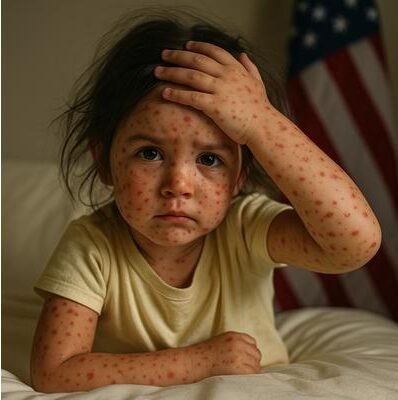
- Early symptoms include fever, cough, runny nose, and conjunctivitis, followed by a spreading red rash.
Complications include pneumonia, encephalitis (brain swelling), and permanent hearing loss. Infants and immunocompromised individuals face the greatest risks.
Already, 14% of reported cases required hospitalization — highlighting the severity of the outbreak.
Schools at the Epicenter of Transmission
The measles resurgence has disrupted schools across the Southwest.
- In Arizona and Texas, multiple districts have suspended in-person learning.
- In Los Angeles County, at least 7 elementary schools have reported outbreaks.
- Some districts now require proof of MMR vaccination before re-entry.
Dr. Marta Jimenez, a pediatric epidemiologist, explained:
“Schools are not just learning centers — they’re amplifiers during outbreaks. One child without protection can endanger an entire classroom.”
Parents are being urged to review immunization records and ensure both MMR doses are administered.
Federal and State Governments Mobilize Emergency Measures
The U.S. government has rolled out an aggressive response:
- Emergency federal funding to support state health departments.
- CDC mobile vaccination units deployed to rural hotspots.
- Public awareness campaigns in English and Spanish.
- Temporary bans preventing unvaccinated children from attending schools.
- Health screenings at U.S.–Mexico border checkpoints to limit cross-border spread.
States have also launched independent measures:
- Texas: Expanded free vaccination clinics, especially in border towns.
- California: New digital system requiring schools to report vaccination coverage in real time.
- Arizona: Deploying mobile teams to reach tribal and rural communities.
These interventions echo measures used in the early 1990s but face new challenges given today’s online misinformation environment.
Cross-Border Spread Raises Global Health Concerns
The outbreak is not confined to U.S. borders.
- Canada has reported 55 cases linked to U.S. travelers.
- Mexico has confirmed 43 cases, largely near the Texas border.
Globally, measles cases have been rising as well. The World Health Organization (WHO) reported that worldwide measles cases doubled in 2024 compared to 2022, with hotspots in Africa and South Asia. The U.S. outbreak threatens to worsen the global situation.
In response, Canada, Mexico, and the U.S. formed a North American Measles Task Force to coordinate surveillance, data sharing, and rapid response protocols.
Doctors, Parents, and Officials Speak Out on the Crisis
Experts see parallels with past crises.
Dr. Elijah Matthews of Johns Hopkins University reflected:
“The 1989–1991 outbreak taught us that vaccination gaps can be deadly. Today we have stronger tools — digital data, advanced vaccines, and global partnerships. What’s missing is public trust.”
Parents across the Southwest are torn. Some demand stricter vaccine mandates, while others remain resistant.
In Phoenix, Maria Hernandez, a mother of two, said:
“I was skeptical of vaccines, but seeing my son’s school close changed my mind. We got vaccinated the next day.”
Meanwhile, anti-vaccine groups continue to campaign online, complicating public health messaging.
A Preventable Tragedy That Demands Urgent Action
The measles resurgence is both a tragedy and a wake-up call. It demonstrates how fragile public health gains can be when misinformation, complacency, and systemic inequities collide.
Preventing further escalation will require a united effort: renewed vaccination drives, fact-based communication, and international cooperation.
This crisis is preventable — and how the U.S. responds now will shape global health lessons for decades to come.
Suggested Internal Links
- WHO Issues New Mosquito-Borne Disease Guidelines.
- Understanding Uterine Fibroids: A Hidden Threat to Women’s Health
- How to Protect Your Mental Health as a Student in 2025
Suggested External Links
- CDC Measles Page: CDC – Measles (Rubeola)
- WHO Fact Sheet: World Health Organization – Measles
- American Academy of Pediatrics (AAP): AAP – Measles Information for Families