A Nation in Turmoil
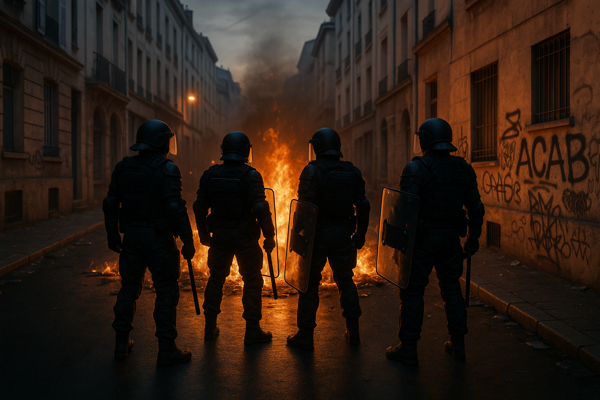
The France immigration protests have escalated dramatically, plunging several cities into chaos and forcing the government to deploy military units to restore order. What began as peaceful demonstrations against stricter immigration laws has devolved into violent street battles, widespread vandalism, and hundreds of arrests.
According to France’s Interior Ministry, more than 70 people were detained over the weekend alone as rioters clashed with heavily armed police, torched cars, and attacked public property. The protests have spread from Paris to Lyon and Marseille, sparking a nationwide debate about immigration, security, and civil liberties.
Why Are France Immigration Protests Turning Violent?
At the heart of the protests lies a controversial reform bill passed last month. The legislation includes:
- Stricter deportation procedures
- Limits on asylum applications
- Expanded border controls
Critics argue that these reforms undermine France’s humanitarian obligations and unfairly target vulnerable migrant groups.
“We’re not criminals. We came here for safety,” said Ahmed K., a 26-year-old asylum seeker from Sudan. “This law treats us like threats.”
Human rights organizations such as Amnesty International have condemned the bill as discriminatory and unconstitutional. By contrast, far-right parties have celebrated the move, calling it a necessary step to protect French identity and security.
Government’s Response: Military Deployment
The government’s response has been swift and controversial. President Emmanuel Macron authorized the deployment of more than 1,500 military personnel to reinforce riot police in major cities.
Defense Minister Sébastien Lecornu defended the decision, stating:
“The military is not here to suppress free speech but to prevent further violence.”
Eyewitnesses described armored vehicles stationed at key intersections, soldiers patrolling train stations, and heavy security near embassies and government buildings. The show of force has drawn sharp criticism from civil rights groups, who argue it risks militarizing civilian spaces.
Public Reaction to France Immigration Protests
Public opinion on the protests is deeply divided.
- Supporters believe the government is unfairly targeting immigrants and asylum seekers, citing over-policing in marginalized neighborhoods.
- Critics argue that violent demonstrators are undermining the legitimacy of peaceful protests by destroying property and endangering lives.
Social media platforms like TikTok and X (formerly Twitter) have amplified the unrest, with viral images of burning barricades, tear gas, and clashes fueling both domestic anger and international solidarity marches. Demonstrations have already erupted in London, Brussels, and Berlin in support of French protesters.
Europe Watches Closely
The France immigration protests are reverberating across Europe, where rising anti-immigrant sentiment is reshaping politics. Italy, Germany, and the Netherlands are also debating tougher immigration laws, raising fears of a continent-wide crackdown.
The European Commission urged French authorities to show restraint, releasing a statement calling for “proportionate and respectful responses to civic demonstrations.” EU officials worry that heavy-handed policing could deepen social divides and inspire similar unrest elsewhere.
The Human Cost: Stories From the Streets
Beyond political headlines, the France immigration protests are leaving a deep mark on communities. Hospitals in Paris and Lyon reported dozens of injuries from rubber bullets, tear gas exposure, and baton charges.
Families in immigrant neighborhoods describe living in fear as clashes spill into residential streets. Local businesses, many owned by migrants, have also suffered property damage.
“We are caught between the police and the rioters,” said Fatima M., a shop owner in Marseille. “Our livelihoods are being destroyed.”
Expert Insight: A Test of Democracy
Dr. Elise Moreau, a political science professor at Sciences Po, described the protests as a “critical test of democratic resilience.”
“How France navigates this crisis will influence immigration and civil rights debates across the entire European Union,” she said.
Analysts warn that unless constructive dialogue begins soon, France risks deepening social polarization and weakening public trust in government institutions.
Economic Impact of France Immigration Protests
The turmoil is also beginning to affect the French economy.
- Tourism: Cancellations are rising as images of unrest spread globally.
- Retail: Major chains in Paris have shut stores temporarily to prevent looting.
- Markets: The CAC 40 stock index fell 1.1% on Monday, as investors feared prolonged instability.
If the France immigration protests continue, analysts warn of long-term damage to France’s international reputation as a stable investment destination.
International Response
World leaders are closely monitoring the France immigration protests. The United Nations High Commissioner for Refugees (UNHCR) urged France to honor its obligations under international asylum law. Meanwhile, human rights groups across the globe have staged protests outside French embassies, calling for a repeal of the reforms.
The United States and United Kingdom both issued travel advisories warning citizens about potential unrest in major French cities.
What’s Next for France?
As the crisis deepens, three potential scenarios could shape the future:
- De-escalation: Through dialogue with protest leaders and revisions to the immigration bill.
- Prolonged Clashes: If both sides refuse to compromise, unrest may spread to more cities.
- EU Involvement: Brussels could intervene, pressuring France to moderate its policies.
For now, the France immigration protests remain unpredictable. Investors, citizens, and policymakers alike are waiting to see whether the Macron government chooses confrontation or compromise.
Conclusion: A Crossroads Moment
The France immigration protests are more than street demonstrations—they represent a clash of values at the heart of modern Europe. The government’s reliance on military force underscores the severity of the crisis, but it also raises urgent questions about civil liberties.
Until the underlying concerns of protesters are addressed, France may continue to see its streets filled with anger, fire, and uncertainty. The way forward will shape not only French politics but also the future of immigration and human rights across the European Union.
Final Thoughts
The France immigration protests are a sobering reminder of the fragile balance between national security and civil liberties. As the country deploys military units and tightens immigration policy, the world watches to see whether order will be restored — and at what cost.
Interna links :
- Afghanistan Earthquake Destroys Villages, 620+ Dead
- Africa Correct The Map: AU Backs Bold Campaign
- Meta AI Data Center Investments
- Gold Price Record High: Gold Surges Past $3,500 Mark